Sam Altman Says Your PC Is a Waste. We Disagree.
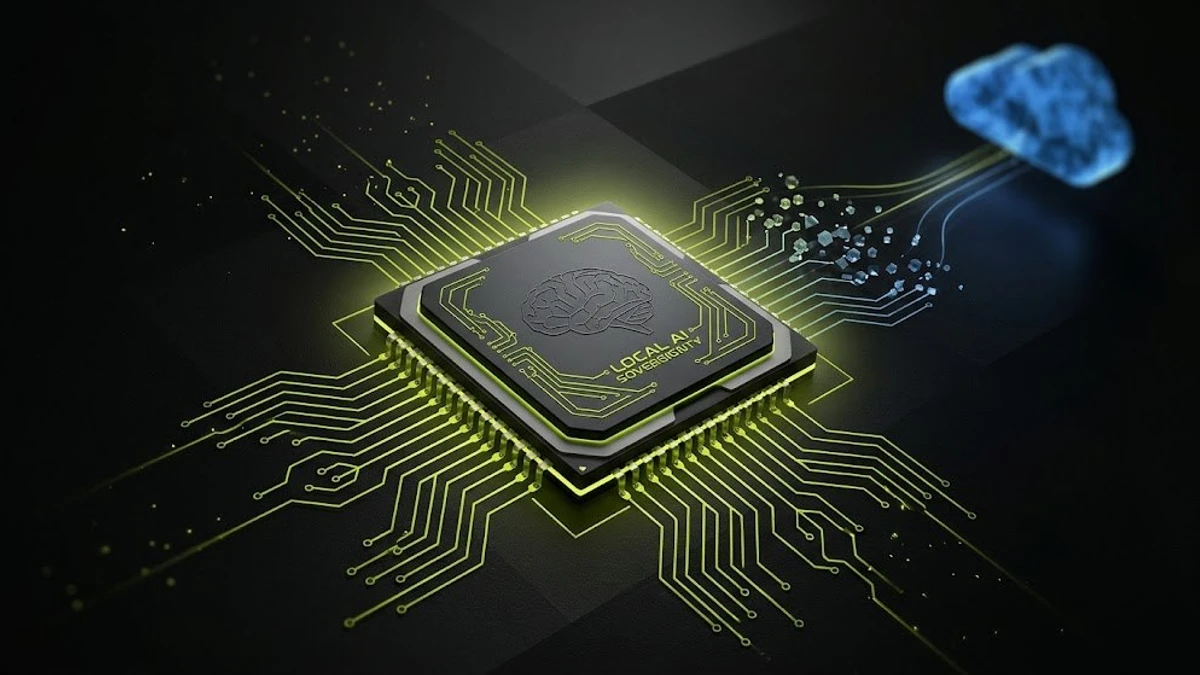
A few days ago, Sam Altman, CEO of OpenAI, said something that made the internet boil. On the Cheeky Pint podcast, he declared that having people run AI models on their own computers is "quite terrible" because it wastes the world's limited supply of RAM.
"It's quite terrible to have everybody have a bunch of the world's limited supply of DRAM sitting in their own computer."
His solution: all that memory should live in data centers. You pay a subscription. The cloud manages everything.
RAM prices have jumped 500% in twelve months. Intel plummeted nearly 30% in the stock market — its worst crash in 52 years. There's a printed circuit board shortage with orders booked through 2030. And Altman says the problem is your 16GB of RAM.
Sorry, but no.
Where Altman Is (Partially) Right
Let's be fair: there's a grain of truth in his argument. A PC that runs an AI model for one hour a day and sleeps the other 23 is indeed suboptimal. Concentrating resources in data centers enables undeniable economies of scale. And the energy cost of millions of idle PCs is real.
The risk of individual over-equipment exists. Buying a 2,000€ GPU to run a 7B parameter model is like buying a truck to go buy bread. It works, but it's not exactly efficient.
Where Altman Is Fundamentally Wrong
Altman's argument is circular. OpenAI is one of the biggest buyers of the very memory he says is scarce. His argument isn't about global efficiency — it's about his business model.
When you depend exclusively on the cloud, you're subject to three variables you don't control:
- Variable costs: The price per token can change. Your data volume can spike the bill. No budget predictability.
- Model changes: A "tweak" in the cloud can break your prompts overnight. Your infrastructure depends on decisions you don't control.
- Availability: If the service goes down, your automation stops. Period.
And then there's the elephant in the room: data sovereignty. When your data leaves your network, it's no longer yours. For a company handling legal contracts, customer data, or trade secrets, local AI isn't a technical preference — it's a security requirement.
Data sovereignty: it's not just security, it's the ability to decide your company's future without asking permission from a provider in Silicon Valley.
The Over-Equipment Trap
The debate isn't "cloud vs. local." It's intelligent sizing.
The real hidden cost of local AI isn't the GPU — it's electricity, maintenance, obsolescence. Buying big "just in case" is exactly what Altman criticizes, and he's right about that. But the solution isn't to surrender and pay an eternal subscription. The solution is sizing for actual usage.
You don't need a data center for your personal assistant. You don't need 80GB of VRAM to triage your inbox. Current open-weight models — Llama, Mistral, DeepSeek, Qwen — are compact enough to run on modest hardware. And they're getting more efficient every day.
The Middle Way: Resource Sharing
The answer to Altman's debate isn't "let everyone buy their own GPU." It's resource sharing.
Sharing expensive infrastructure that no individual user would leverage 24/7 makes economic and ecological sense. A shared server offers the best of both worlds: capacity when you need it, shared cost when you don't.
- A shared server offers capacity when you need it, shared cost when you don't.
- Small, specialized models (like Liquid AI's LFM3, at just 1.7B parameters) change the equation: they run on a Raspberry Pi, no data center needed.
- Hybrid architecture: local for everyday tasks (assistants, triage, automation), cloud for intensive work (training, large inference).
The future isn't "all in OpenAI's cloud" or "all in your basement." It's hybrid, shared, and intelligently sized.
Conclusion
Altman defends his business model. It's understandable — it's his job. But confusing OpenAI's interest with the public interest is a leap we can't afford to make.
Local AI doesn't replace the cloud. It complements it. It balances it. And with increasingly efficient open-weight models, the barrier to entry lowers while cloud dependency becomes optional, not mandatory.
The real debate isn't whether you should have a powerful PC. It's who controls your infrastructure. And Altman's preferred answer — "no one, just pay the subscription" — isn't the only one.
The future isn't "all cloud" or "all local." It's hybrid, shared, and intelligently sized. Those who don't understand this will lose.
You might also like
Ready for the technology leap?
Don't let your SME fall behind. We implement the AI infrastructure that will give you the competitive edge.
Book Your Free Audit
